

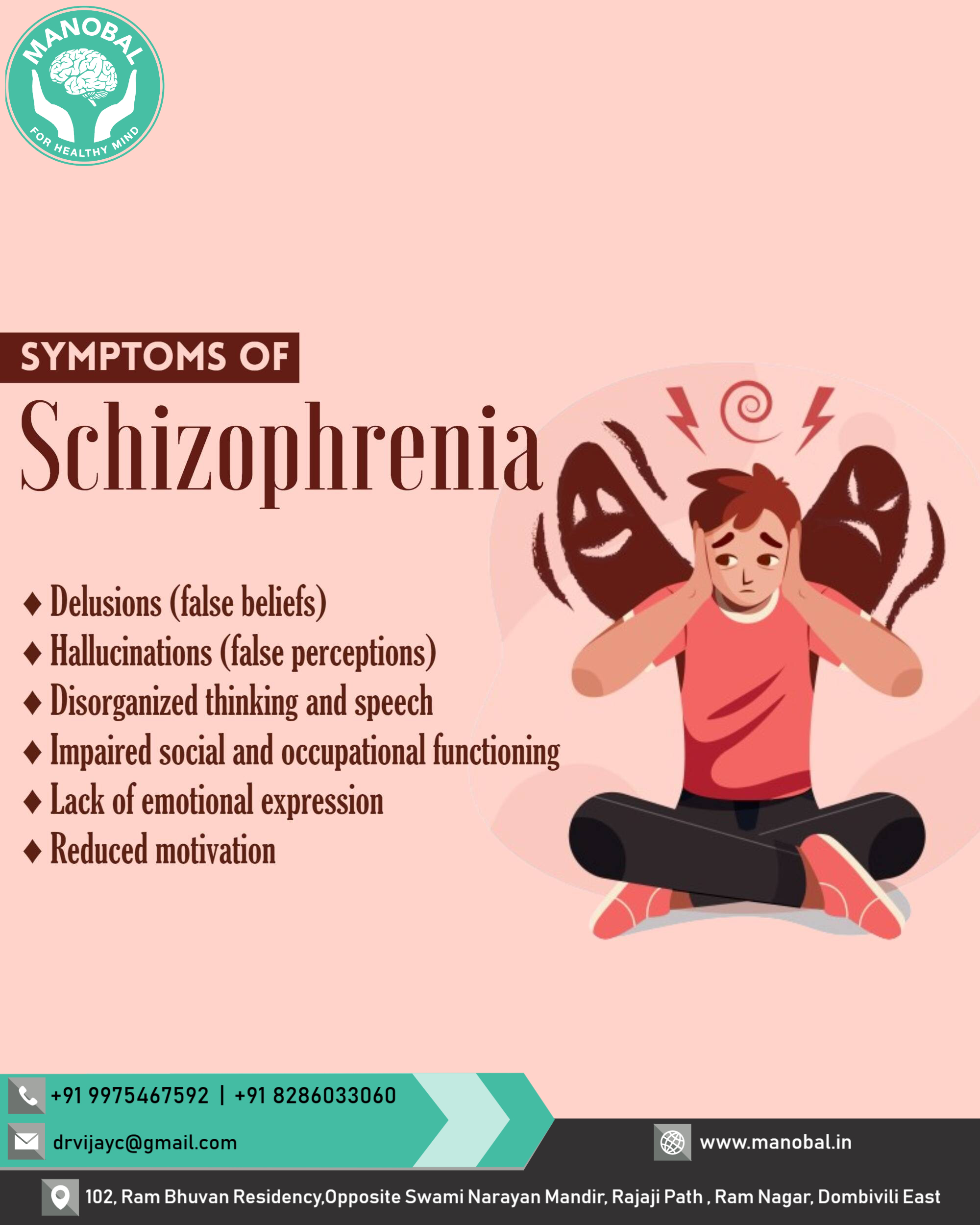
Schizophrenia is a serious mental disorder that affects how a person thinks, feels, and behaves. Symptoms are generally categorized into three main types: positive, negative, and cognitive symptoms.
1. Positive Symptoms
These are psychotic behaviors not normally present in healthy individuals. They include:
Hallucinations – Most commonly hearing voices, but can also include seeing, feeling, or smelling things that aren't there.
Delusions – Strongly held false beliefs (e.g., thinking others are plotting against you or believing you have special powers).
Disorganized Thinking – Trouble organizing thoughts or connecting them logically; may result in incoherent speech.
Disorganized or Abnormal Motor Behavior – Includes unpredictable agitation, silliness, or catatonia (lack of movement or response).
2. Negative Symptoms
These are related to disruptions in normal emotions and behaviors:
Flat affect – Reduced expression of emotions (e.g., no facial expression, monotone voice).
Avolition – Lack of motivation to initiate and sustain purposeful activities.
Anhedonia – Inability to experience pleasure.
Alogia – Poverty of speech or decreased speech output.
Social withdrawal – Reduced interaction with others.
3. Cognitive Symptoms
These are often subtle but can affect day-to-day functioning:
Poor executive functioning – Difficulty understanding information and using it to make decisions.
Problems with attention – Trouble focusing or paying attention.
Working memory deficits – Difficulty remembering and using information immediately after learning it.
Important Notes:
Symptoms typically begin in late adolescence or early adulthood.
They vary in severity and may come and go (episodes).
Schizophrenia requires medical diagnosis and long-term treatment, often including antipsychotic medication, therapy, and support services.
1. Positive Symptoms
These are psychotic behaviors not normally present in healthy individuals. They include:
Hallucinations – Most commonly hearing voices, but can also include seeing, feeling, or smelling things that aren't there.
Delusions – Strongly held false beliefs (e.g., thinking others are plotting against you or believing you have special powers).
Disorganized Thinking – Trouble organizing thoughts or connecting them logically; may result in incoherent speech.
Disorganized or Abnormal Motor Behavior – Includes unpredictable agitation, silliness, or catatonia (lack of movement or response).
2. Negative Symptoms
These are related to disruptions in normal emotions and behaviors:
Flat affect – Reduced expression of emotions (e.g., no facial expression, monotone voice).
Avolition – Lack of motivation to initiate and sustain purposeful activities.
Anhedonia – Inability to experience pleasure.
Alogia – Poverty of speech or decreased speech output.
Social withdrawal – Reduced interaction with others.
3. Cognitive Symptoms
These are often subtle but can affect day-to-day functioning:
Poor executive functioning – Difficulty understanding information and using it to make decisions.
Problems with attention – Trouble focusing or paying attention.
Working memory deficits – Difficulty remembering and using information immediately after learning it.
Important Notes:
Symptoms typically begin in late adolescence or early adulthood.
They vary in severity and may come and go (episodes).
Schizophrenia requires medical diagnosis and long-term treatment, often including antipsychotic medication, therapy, and support services.